+86-579-87217855
 ykdc@dingchuncup.com
Choose Responsibility Choose Dingchun
-BSCI Certified S/S Tumbler


-BSCI Certified S/S Tumbler
Oct 30,2026
A vacuum insulated bottle is supposed to keep drinks hot or cold for hours. Commuting, hiking, travel, everyday hydration—that's the pitch. But those advertised retention times? They don't always match what you actually get. Real performance depends on bottle construction, lid design, starting temp, fill level, ambient conditions, how often you open the thing. Knowing these variables helps you set realistic expectations and helps buyers compare manufacturers without getting fooled by a single headline number.
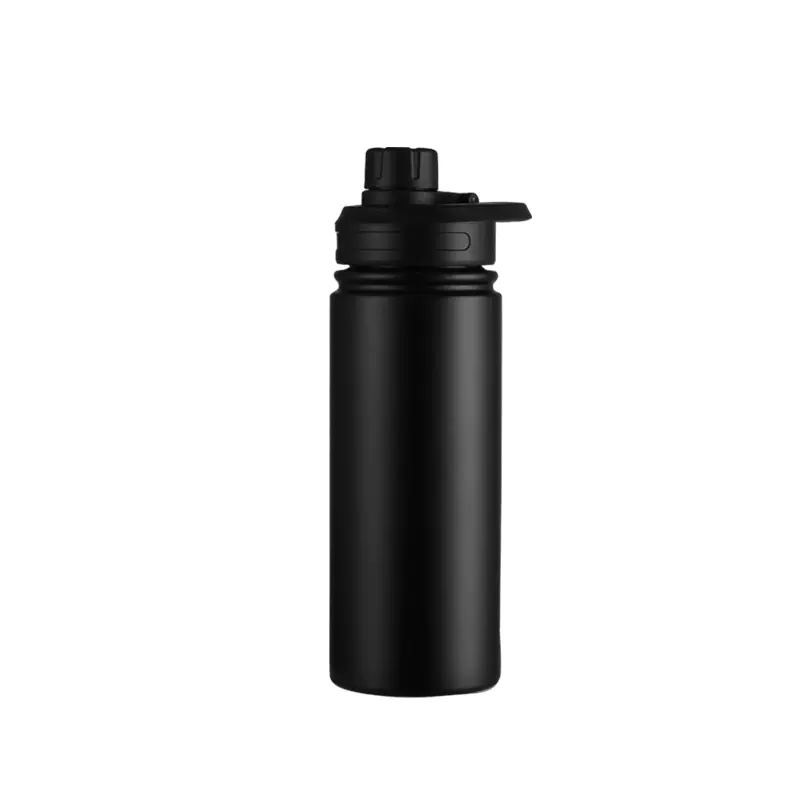
How Does a Vacuum Insulated Bottle Maintain Temperature?
Double-wall construction with a vacuum between the walls. The vacuum has very few gas molecules, so it cuts heat transfer through conduction and convection across that gap. Some designs add reflective surfaces to reduce radiant heat transfer too.
But insulation doesn't stop heat transfer completely. Heat still moves through the lid, neck, seals, structural connections. Every time you open the bottle, heat exchange with the surroundings increases. That's why two bottles with similar capacity can perform differently. Insulation quality matters, but the complete design decides how well the bottle holds temperature.
What Temperature Retention Can You Realistically Expect?
Plenty of well-designed vacuum insulated bottles claim 12 to 24 hours for hot or cold retention. Specs vary by model and manufacturer. Treat those figures as product-specific claims, not universal guarantees.
Here are some general ranges—planning guidance, not certified benchmarks. Actual results depend on design and testing conditions.
|
Usage scenario |
Indicative retention expectation |
Main factors affecting performance |
|---|---|---|
|
Hot beverages after 6 hours |
Many quality bottles can still keep drinks noticeably hot |
Initial temperature, lid seal, and fill level |
|
Hot beverages after 12 hours |
Drinks may remain hot or become warm |
Insulation quality and ambient temperature |
|
Hot beverages after 24 hours |
Performance varies substantially; some products retain useful warmth |
Product design and opening frequency |
|
Cold beverages after 12 hours |
Many quality bottles can keep drinks cool |
Starting temperature and outside heat exposure |
|
Cold beverages after 24 hours |
Some bottles maintain cool temperatures effectively |
Wall construction, lid design, and use conditions |
|
Ice retention beyond 24 hours |
Possible in some designs, but not guaranteed |
Ice quantity, bottle capacity, and environmental conditions |
These describe broad patterns, not guaranteed temperatures. A drink that feels hot to one person might feel only warm to another. For meaningful comparisons, manufacturers should publish measured temperatures at specific time intervals.
Which Factors Have the Greatest Impact on Temperature Retention?
Insulation Construction and Material Quality
A properly manufactured vacuum layer is central to thermal performance. Damage to the insulated structure reduces effectiveness. Inconsistencies in wall construction or manufacturing quality can produce variable results across individual bottles. Stainless steel is common—durable and corrosion-resistant when the right grade is picked. But stainless steel alone doesn't guarantee great heat retention. Vacuum integrity, structural connections, overall manufacturing quality—all equally important.
Lid Design and Sealing Performance
The lid is often a significant heat pathway because it doesn't get the same uninterrupted vacuum insulation as the walls. A well-fitted lid, effective gasket, secure closure—they reduce heat loss and prevent leaks. Drinking spouts and wide openings introduce additional heat exchange, especially when used often. When comparing products, look at lid structure and whether replacement seals are available. That tells you something about long-term usability.
Starting Temperature and Preconditioning
A bottle filled with a very hot beverage retains useful warmth longer than one filled with something starting at a lower temp, assuming similar conditions. Preheating with hot water before filling reduces the initial heat absorbed by the inner wall. For cold drinks, pre-chilling the bottle does something similar. Simple steps, practical results—no need to change the bottle itself.
Fill Level and Environmental Conditions
A nearly full bottle has less air space above the liquid than a partially filled one. That affects heat exchange, especially when the bottle is opened or moved. Ambient temperature matters too. Direct sunlight, a hot car, freezing outdoor conditions—different thermal environments from a temperature-controlled office. Opening the lid repeatedly brings in fresh air and allows more heat transfer. Keep it closed when you can.
How Can Manufacturers and Buyers Test Temperature Retention?
A useful test needs a repeatable procedure and measurable results. Without controlled conditions, comparing two products is misleading.
A practical evaluation:
For cold retention, use the same starting temperature and document whether ice is included. Ice-retention tests and liquid-temperature tests should be reported separately—they measure different things. Manufacturers should state test conditions alongside claims. For procurement, documented results beat vague statements like "keeps drinks hot all day" without a defined measurement method.
How to Choose a Bottle That Meets Your Daily Needs
The right vacuum insulated bottle depends on how long you need to maintain temperature. Short commutes? Moderate retention may be enough. Long shifts, camping, extended travel? Prioritize verified long-duration performance, secure sealing, durable construction.
Check the manufacturer's temperature retention specs, but also examine how those figures were measured. Capacity, mouth design, lid construction, cleaning requirements, replacement-part availability—all contribute to practical value. A reliable purchasing decision combines realistic performance expectations with transparent testing evidence. Consider insulation construction, closure quality, starting temperature, usage conditions. That's how you choose a bottle that delivers dependable thermal performance in everyday situations.
Your email address will not be published. Required fields are marked *



 +86-579-87217855
 ykdc@dingchuncup.com
 +86-579-87217600
 No.169 Yingbin Avenue, Industrial function zone, Xiangzhu Town, Yongkang Zhejiang, China.

OEM Thermos Mugs Manufacturer
 English
 Español
 عربى