+86-579-87217855
 ykdc@dingchuncup.com
Choose Responsibility Choose Dingchun
-BSCI Certified S/S Tumbler


-BSCI Certified S/S Tumbler
Oct 16,2026
Stainless Steel Tumbler Bottle often advertise 12 hours of heat retention or 24 hours of cold retention, but those numbers rarely match real-world daily use. Without proper testing, buyers don’t have much to go on when judging actual performance. For manufacturers and importers, verifying these claims is a core part of quality control. A bottle can look well-made on the shelf, but still lose heat faster than promised due to a faulty seal or small insulation flaw. Testing catches these issues before products reach customers, and gives buyers concrete data to compare suppliers.
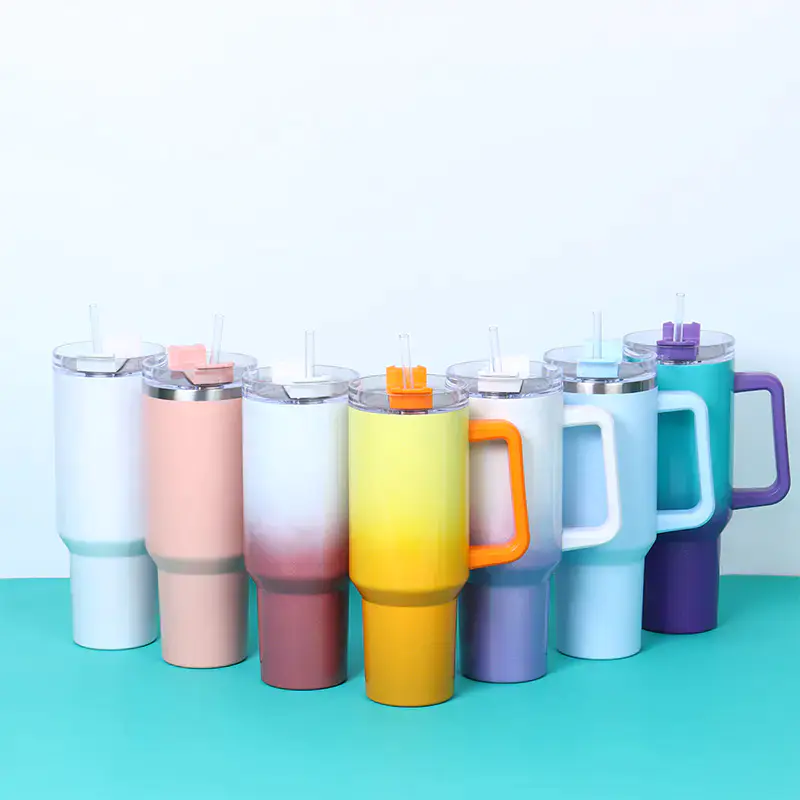
Most vacuum-insulated tumblers have two stainless steel walls with a sealed, airless gap between them to slow heat transfer. But double walls alone don’t guarantee reliable insulation. A weak seal or minor cavity damage can drag down performance quickly, and heat also escapes through the lid, rim, and base. That’s why manufacturers need actual test results, not just supplier spec sheets. Testing confirms if a bottle lives up to its claims, and helps explain why drinks might lose temperature faster than expected.
A hot water retention test measures how quickly hot water cools inside a tumbler. The process is simple: fill the bottle with water at a set temperature, seal the lid, and track temperature over a fixed period. For valid results, keep starting temperature, water volume, room temperature, and lid position consistent, and document the test timeline and equipment used. If a brand claims 12 hours of heat retention, the report should list the exact temperature at the 12-hour mark. Vague lines like “still warm” don’t give enough context. The lid makes a bigger difference than you might think, too—testing without a lid gives very different results. Buyers should always check test conditions before comparing numbers across suppliers.
Cold water testing follows a similar process: fill the tumbler with chilled water and track temperature over time. Consistent conditions make comparisons far more reliable. Ice retention needs separate testing, though. Water stays cold even after all ice melts, so a standard cold water test can’t validate an ice retention claim. The test should specify how much ice is used and what counts as the endpoint. If a supplier claims 24 hours of ice retention, the report should show how much ice remains after that window under stated conditions. The two metrics measure different things, so they need separate records.
Retention tests show performance, but not the cause of poor results. Vacuum integrity checks help spot issues with the sealed cavity between walls. Methods vary by design and production process; some use specialized equipment or standard leak-detection protocols. Measuring vacuum in a finished sealed bottle is tricky, and may require custom fixtures or destructive testing. It’s also worth inspecting welds and seal points. Fast heat loss could stem from vacuum loss, but the lid or base could just as easily be the issue. Testing should pinpoint the root cause, not write every problem off as a vacuum failure.
Exterior temperature testing checks how the outer surface reacts to hot or cold contents. With hot water, a warm outer wall signals heat leaking through insulation. With cold water, surface readings help assess insulation behavior and condensation risk. Infrared cameras show temperature variations across the bottle, while contact sensors work for targeted spots. These readings have limits, though. They can’t confirm how long a drink will stay hot, or measure exact vacuum levels. They work best paired with retention testing.
Test plans should align with what manufacturers promise on packaging.
| Product claim | Recommended test | What to measure |
|---|---|---|
| Keeps drinks hot for 12 hours | Hot water retention test | Water temperature after 12 hours |
| Keeps drinks cold for 24 hours | Cold water retention test | Water temperature over 24 hours |
| Keeps ice for an extended period | Ice retention test | Remaining ice under defined conditions |
| Uses vacuum insulation | Vacuum integrity checks | Cavity and seal integrity evidence |
| Keeps exterior comfortable to hold | Surface temperature test | Outer-wall temperature at set points |
| Maintains performance with daily use | Durability + post-stress thermal tests | Structural condition, leaks, retention results |
No single test covers every claim. Each advertised feature needs appropriate evidence and clear pass/fail criteria.
A tumbler may work great new, but develop issues after drops or daily use. Durability testing checks how products hold up under normal handling, including leak tests, impact tests, and repeated lid cycling. Thermal testing after impact shows if damage has harmed insulation. Test plans should fit the product’s intended use, and manufacturers should document samples, methods, and results. Independent lab testing adds extra confidence for key claims.
When reviewing a supplier’s report, don’t just look at headline numbers. Check that it includes product model, sample size, test conditions, and full results. ISO/IEC 17025 accreditation signals lab competence, but only if the test falls within its scope. Also note that prototypes may perform well, but production units can vary—material or design changes warrant follow-up testing.
Before approving a tumbler, confirm advertised performance is backed by recorded tests. Clear procedures and representative samples make supplier comparisons more meaningful, and help manufacturers catch issues early to keep quality consistent across batches.
Your email address will not be published. Required fields are marked *



 +86-579-87217855
 ykdc@dingchuncup.com
 +86-579-87217600
 No.169 Yingbin Avenue, Industrial function zone, Xiangzhu Town, Yongkang Zhejiang, China.
OEM Thermos Mugs Manufacturer
 English
 Español
 عربى
عربى