+86-579-87217855
 ykdc@dingchuncup.com
Choose Responsibility Choose Dingchun
-BSCI Certified S/S Tumbler


-BSCI Certified S/S Tumbler
Oct 23,2026
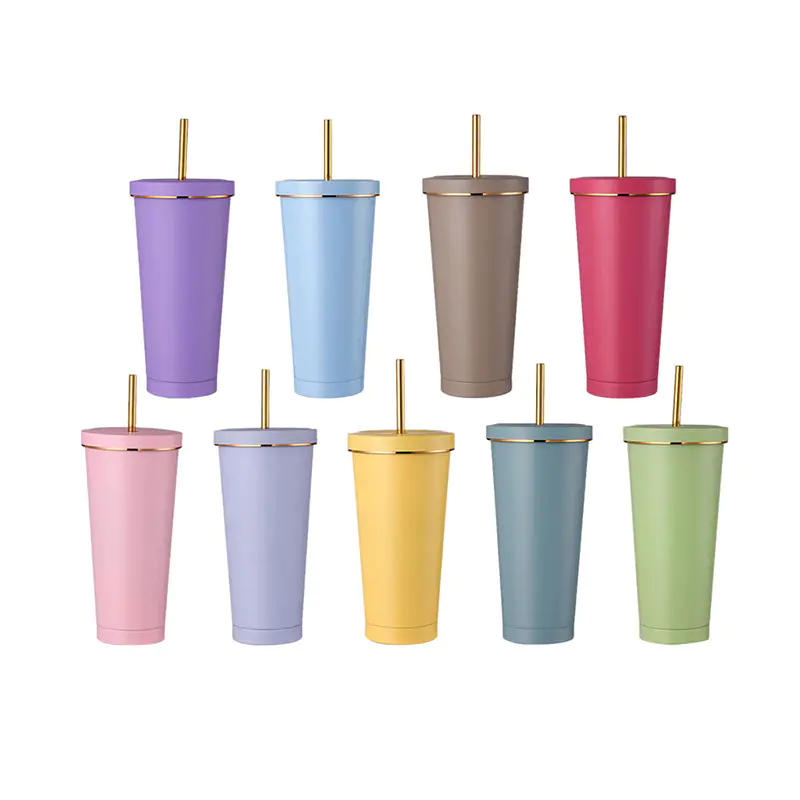
An Insulated Straw Mug keeps drinks at the right temp and makes sipping easy—at home, at work, on the move. But insulation doesn't stop leaks. The lid structure, straw opening, sealing gasket, closure mechanism—they all decide whether liquid stays put during daily use. Knowing how these bits work helps you pick a mug that won't betray you and helps product developers spot leak problems before manufacturing. No single design is leakproof in every situation. But well-fitted components plus proper testing can make a real difference.
How Lid Structure Influences Leak Resistance
The lid is the main line of defense. Its design determines how securely the drinking openings are covered and how well it fits the mug body.
A screw-on lid gives a secure connection when the threads engage right and the gasket compresses properly. Snap-on lids rely on locking features. Both can work fine when made to suitable tolerances. But poor alignment, damaged threads, or loose locking tabs create leakage paths. The lid-to-body interface matters a lot. Even a clever straw opening can't stop leaks if liquid escapes around the lid perimeter.
For better performance, look for a lid that closes evenly, engages securely, and comes off for cleaning without a fight. Product designers should also think about whether repeated opening and closing gradually weakens the locking features.
How Straw Openings and Valves Affect Leakage
The straw is convenient. But that opening is also an escape route. A mug with an uncovered straw hole leaks when tilted, shaken, or laid on its side.
Straw-lid designs tackle this several ways. Some use a close-fitting silicone gasket around the straw. Others include a flexible valve or a movable cover that closes the opening when not in use. Each has different performance characteristics. A snug straw seal reduces leakage around the straw, but it may not stop liquid from escaping through the straw itself. A valve can restrict flow, though effectiveness depends on geometry, material flexibility, closing pressure.
|
Design feature |
Main benefit |
Potential leakage risk |
|---|---|---|
|
Close-fitting straw opening |
Reduces gaps around the straw |
Wear or poor fit may weaken the seal |
|
Silicone straw gasket |
Creates a flexible sealing interface |
Dirt, deformation, or incorrect installation can affect sealing |
|
Self-closing valve |
Helps restrict liquid flow through the opening |
Debris or material fatigue may prevent full closure |
|
Sliding or hinged straw cover |
Protects the opening when closed |
Incomplete closure can leave a leakage path |
|
Removable straw |
Simplifies cleaning and replacement |
An incorrectly seated straw may not seal properly |
For carrying in a bag, a design with a dedicated straw closure and a well-sealed lid perimeter beats an open straw port. Check whether the manufacturer rates it leak-resistant or fully leakproof.
Why Gasket Material and Fit Matter
Gaskets compensate for small gaps between rigid parts. Silicone is common—flexible, maintains contact over repeated use when properly specified. But material alone doesn't determine performance. Thickness, cross-sectional shape, compression, dimensional consistency—all affect the seal. A gasket too loose lets liquid through gaps. Excessive compression makes assembly hard and speeds deformation.
Food-contact suitability matters too. Manufacturers should pick materials appropriate for beverage-contact conditions and comply with applicable food-contact requirements in target markets.
Routine care helps. Remove and clean detachable seals per instructions. Inspect for tears or permanent deformation. Reinstall correctly. A bit of residue around a gasket interferes with proper contact.
How Mug Use and Liquid Movement Affect Leakage
A lid that works on a stationary mug behaves differently in transit. Walking, driving, stuffing it into a backpack—movement and pressure changes inside the container. Temperature plays a role too. Hot drinks warm the air inside, creating pressure changes that affect liquid movement through an open straw. Actual effect depends on construction, fill level, temperature, closure system.
This is why leak resistance should be evaluated under realistic conditions. Manufacturers should consider upright storage, movement during transport, tilted or inverted positions when those match intended use. A key distinction: leak-resistant doesn't automatically mean spill-proof. Some straw mugs reduce splashes during normal use but aren't designed to stay sealed upside down. Product descriptions should state these limitations clearly.
Which Tests Help Evaluate an Insulated Straw Mug?
Reliable claims need repeatable tests that reflect intended use. A practical evaluation can include:
|
Test method |
What it evaluates |
Important observations |
|---|---|---|
|
Upright leakage test |
Seal performance during stationary storage |
Check for moisture around the lid and straw |
|
Tilt test |
Leakage when the mug is held at an angle |
Record the angle and exposure duration |
|
Inversion test |
Resistance to leakage when upside down |
Use only when inverted transport is an intended requirement |
|
Movement or shake test |
Seal stability during everyday handling |
Check for droplets, loose closures, and displaced gaskets |
|
Repeated opening and closing |
Durability of the lid mechanism |
Look for wear, loosening, and reduced sealing consistency |
|
Temperature-condition test |
Performance under specified beverage conditions |
Inspect seals and closures after conditioning |
Testing should use consistent fill levels, liquid temperatures, test durations, handling procedures. Record results across multiple samples—manufacturing variation affects performance. For commercial products, documented internal testing and, where appropriate, independent lab evaluation beat an informal demonstration. Any published claim should match the conditions the product actually passed.
How to Choose a More Leak-Resistant Straw Mug
Before buying an Insulated Straw Mug, check how the lid locks, how the straw opening closes, whether the product includes replaceable seals. Think about how you'll carry it. A mug used upright at a desk needs different leak protection from one tossed in a travel bag.
Look for clear manufacturer instructions covering cleaning, assembly, temperature limits, replacement parts. Removable components make hygiene easier but must fit securely after reassembly. Check whether the manufacturer specifies splash-resistant, leak-resistant, or suitable for transport in different orientations.
For product developers and buyers, a dependable design combines a secure lid-to-body interface, appropriately fitted gaskets, an effective straw closure, durable materials, documented performance testing. These features work together to reduce leakage while preserving the convenience that makes straw mugs popular.
Your email address will not be published. Required fields are marked *



 +86-579-87217855
 ykdc@dingchuncup.com
 +86-579-87217600
 No.169 Yingbin Avenue, Industrial function zone, Xiangzhu Town, Yongkang Zhejiang, China.

OEM Thermos Mugs Manufacturer
 English
 Español
 عربى